On July 29, 2026, the global semiconductor industry reached a milestone. According to the latest report from the International Semiconductor Industry Association (SEMI), total global semiconductor investment in the first half of 2026 exceeded $120 billion, a 35% increase from the same period in 2025, setting a record for the same period. Among them, AI chips and advanced packaging technologies became the strongest growth engines, contributing 45% and 20% of the total investment, respectively. This investment boom is not only reshaping the global chip industry landscape but also revealing the core tracks for investors in the next decade.
AI Chips: Computing Power Arms Race Continues to Heat Up
AI chips were undoubtedly the biggest highlight of semiconductor investment in the first half of 2026. As generative AI moves from the cloud to the edge and the number of parameters in large language models breaks the trillion level, the market demand for high-performance computing chips has grown exponentially. Giants such as NVIDIA, AMD, and Intel have increased investment, with NVIDIA's single-quarter R&D and capital expenditure totaling over $15 billion, mainly for the next-generation Blackwell architecture GPU and dedicated AI accelerators. Meanwhile, startups have also received substantial funding; for example, Silicon Valley-based Cerebras Systems completed a $2 billion funding round in June 2026 for its wafer-scale chip iteration.
The boom in AI chip investment is backed by the rapid expansion of data centers. According to data from Synergy Research Group, the number of global hyperscale data centers exceeded 900 in Q2 2026, with over 60% deploying dedicated AI training clusters. This drove strong demand for GPUs, ASICs, and neuromorphic chips. It is worth mentioning that Chinese AI chip companies, driven by autonomous and controllable policies, have also experienced rapid development. Huawei Ascend and Cambricon and other manufacturers have increased their domestic market share to 35%, and related supply chain investment grew 50% year-on-year.
Advanced Packaging: Chiplet Technology Blazes a New Trail
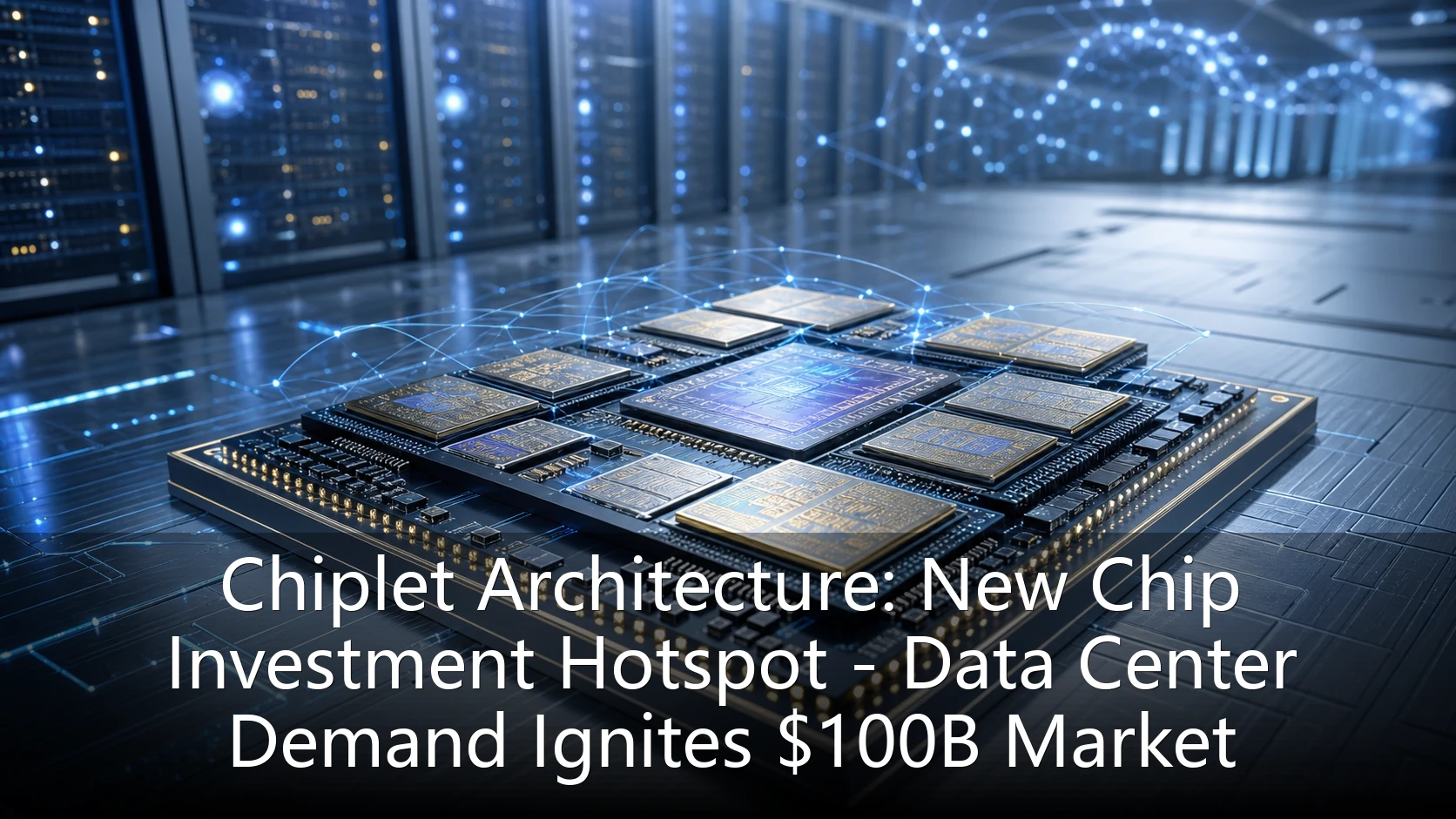
Against the backdrop of slowing Moore's Law, advanced packaging technology, especially the Chiplet architecture, has become a key path to improving chip performance. In the first half of 2026, global advanced packaging investment reached $24 billion, with Chiplet-related investment accounting for over 70%. TSMC's 3D Fabric platform, Intel's EMIB technology, and Samsung's I-Cube have become mainstream solutions. Chiplet not only enables heterogeneous integration but also lowers the threshold for chip design, allowing small and medium-sized IC design companies to develop high-performance products by combining chip modules from different manufacturers.
This trend has driven the prosperity of the packaging equipment and materials supply chain. Orders for advanced packaging equipment from Applied Materials, Tokyo Electron, and other equipment manufacturers increased 40% year-on-year, while the market size for specialty materials such as Abstacle materials and underfill exceeded $5 billion. Analysts pointed out that Chiplet will shift the semiconductor industry from a single-chip performance competition to a system-level integration capability competition. It is estimated that by 2028, chips designed using Chiplet will account for over 60% of the high-end chip market.
Regional Investment Landscape: US-Europe Competition Accelerates, China Seeks Breakthrough
From a regional perspective, semiconductor investment in the first half of 2026 showed a clear three-pillar pattern. The United States, driven by the continued stimulus of the CHIPS and Science Act, attracted total investment exceeding $50 billion, accounting for 41% of the global share. Intel's two fabs in Ohio officially started production in May 2026, mainly producing AI chips using the Intel 18A process; TSMC's Arizona plant also rolled out 3nm capacity as scheduled, with monthly wafer output reaching 20,000.
In Europe, the European Chips Act drove $20 billion in investment, mainly concentrated in Germany, France, and Italy. Infineon's silicon carbide wafer fab in Germany started mass production in April 2026, with an annual capacity of 1 million wafers, strongly supporting the demand for power devices in electric vehicles and renewable energy. In addition, ASML in the Netherlands has orders for High-NA EUV lithography machines scheduled until 2028, with a single machine price exceeding 400 million euros, becoming a hard currency in the semiconductor equipment field.
Investment in the semiconductor sector in China shows characteristics of risks and opportunities coexisting. Affected by US export controls, Chinese companies face certain obstacles in importing high-end chip manufacturing equipment, but the domestic capital market's enthusiasm for semiconductor autonomy remains undiminished. In the first half of 2026, there were 247 investment and financing events in China's semiconductor field, involving a total amount of over $35 billion, with chip design and localized equipment tracks being the most sought after. SMIC's Beijing Lingang factory successfully trial-produced 28nm chips in June, achieving a 90% domestic equipment utilization rate, becoming an important milestone for domestic substitution.
Outlook: Cyclical Upswing Combined with Structural Opportunities
From the perspective of the semiconductor cycle, the industry is currently in the early stages of a new upswing. Global chip inventory levels have fallen from the peak in 2025 to normal levels, while continued growth in demand from AI, electric vehicles, and the Internet of Things is expected to push full-year semiconductor sales in 2026 to exceed $800 billion. In terms of investment strategy, it is recommended that investors focus on the following three main lines: first, AI computing chip leaders, including NVIDIA, AMD, and related industry chains; second, advanced packaging and Chiplet-related equipment and materials companies; and third, companies with technological breakthrough capabilities in the field of semiconductor domestic substitution.
However, risks cannot be ignored. Geopolitical tensions may lead to further fragmentation of the supply chain, while the Fed's continued tightening monetary policy may compress the upside space for high-valuation chip stocks. In short, the investment logic for the chip track has shifted from cyclical driving to structural growth, and grasping the match between core technology and market demand will be the key to future success.