Semiconductor Industry: Current Situation, Challenges and Future Outlook
Keywords
Semiconductor; Chip; Advanced Process; Domestic Substitution; Geopolitics; Supply Chain Security
Introduction
Semiconductor, as the cornerstone of modern electronics, is known as "industrial food." From smartphones to supercomputers, from autonomous driving to artificial intelligence, semiconductor technology permeates every corner of economic and social development. Driven by the global wave of digitalization and intelligence, the semiconductor industry has become an important benchmark for measuring a country's technological strength and strategic security. However, in recent years, intensified geopolitical competition, accelerated technology iteration, and prominent supply chain risks have led to the restructuring of the traditional global division of labor system. This article will systematically analyze the semiconductor industry from dimensions such as industry structure, technology evolution, challenges and opportunities, aiming to provide readers with a panoramic professional understanding.
I. Global Semiconductor Industry Structure and Market Status
Currently, the global semiconductor market features high concentration and diversification coexisting. The United States, South Korea, Japan, Europe and Taiwan region of China each have advantages in chip design, manufacturing, packaging and testing, equipment and materials. According to industry data, the global semiconductor market size exceeded $600 billion in 2024, with logic chips, memory chips and analog chips being the three pillars. The explosive growth in AI computing power demand has made high-performance computing (HPC) chips the core growth engine, while application scenarios such as automotive electronics and the Internet of Things are opening new growth space for the industry.
It is worth noting that the globalized collaboration of the semiconductor industry chain once brought high efficiency, but in recent years, measures such as the U.S. technology blockade against China, tightened equipment export controls by Japan and the Netherlands, are accelerating the trend of regionalization and localization. Various countries have introduced industrial support policies, such as the U.S. CHIPS and Science Act, the European Chips Act, and China's 14th Five-Year Plan, all emphasizing the enhancement of local semiconductor self-reliance. This trend not only brings short-term prosperity in plant construction and investment but also implies medium- and long-term risks of duplicate construction and rising costs.
II. Technology Evolution: From Moore's Law to the Post-Moore Era
The core driving force of semiconductor technology - Moore's Law - is encountering physical limits in the advanced process field. Competition among TSMC, Samsung and Intel in the 3nm and 2nm nodes is becoming increasingly intense, with R&D investment and construction costs for each generation rising exponentially. Meanwhile, the performance improvement brought by further transistor scaling is slowing, while power consumption and heat dissipation issues are becoming more prominent. This forces the industry to explore new technology paths:
- Advanced Packaging and Heterogeneous Integration: Through 3D stacking and Chiplet technology, integrating chip modules with different functions and processes to improve system performance without relying on extreme line width. This direction has become an important breakthrough in the post-Moore era.
- Emerging Materials and Devices: Frontier research such as carbon-based chips, quantum computing, and photonic chips is accelerating. Although still far from large-scale commercialization, potential breakthroughs may disrupt the existing industry structure.
- EDA and Design Methodology: Artificial intelligence is beginning to deeply engage in chip design, optimizing placement and routing and predicting power consumption through reinforcement learning, potentially shortening design cycles and lowering barriers.
III. Macroeconomic and Policy Environment: Interest Rates, Capital and Geopolitical Game
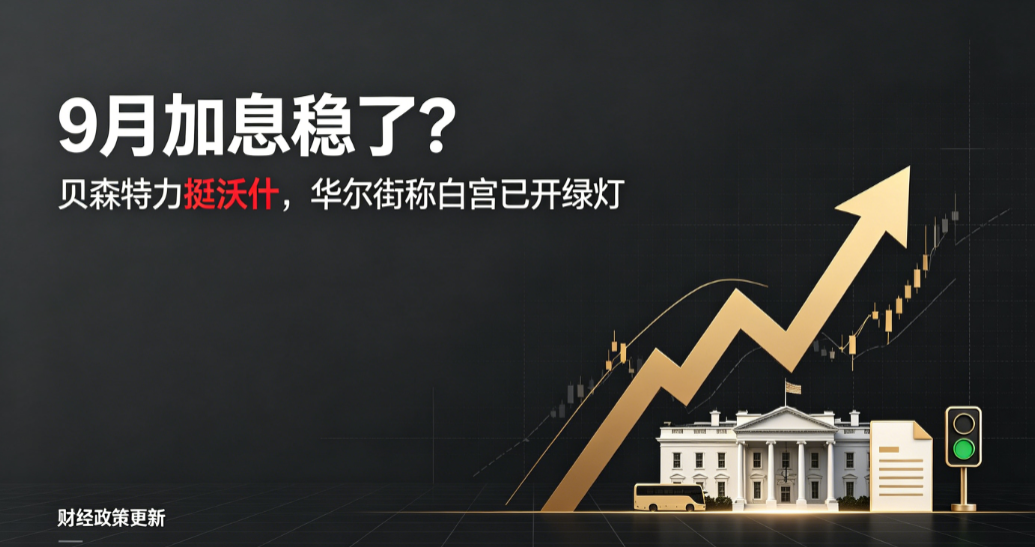
Semiconductors are capital- and technology-intensive, heavily reliant on external financing environment and government support. The Fed's interest rate hike cycle directly affects corporate debt financing costs and venture capital willingness. When rates rise, start-up valuations suffer, and expansion projects of mature manufacturers may be delayed due to higher capital costs. Conversely, rate cut cycles often accompany industry prosperity. From the chart below, we can see a significant correlation between Fed interest rate policy and semiconductor industry investment and financing activity:
In addition, geopolitical factors are increasingly becoming key variables affecting semiconductor investment decisions. U.S. Treasury Secretary Bessent has repeatedly emphasized the importance of chip supply chain security, and Wall Street analysts continue to focus on the impact of export controls on companies like Micron and Nvidia. For China, despite intensified external suppression, the domestic substitution process in semiconductor equipment and materials is accelerating - in 2024, China's semiconductor equipment localization rate exceeded 20%, with some key products achieving breakthroughs from zero, but core shortcomings such as lithography machines and high-purity chemical reagents still require long-term efforts.
IV. Opportunities and Challenges for China's Semiconductor Industry
China is the world's largest semiconductor consumer market, but its self-sufficiency rate has long been low. In recent years, with support from the National Integrated Circuit Industry Grand Fund, tax incentives and talent training systems, representative companies such as Huawei, SMIC, and YMTC have achieved phased breakthroughs. For example, SMIC's 28nm process has achieved mass production, with steadily increasing global share in mature processes; Huawei has built a relatively complete autonomous ecosystem around 5G communication and AI chips.
However, China's semiconductor industry still faces multiple challenges: obstacles in importing key equipment such as high-end lithography machines, limited expansion of advanced process capacity; constraints in EDA tools and core IP; incomplete innovation ecosystem and shortage of high-end talent. More notably, signs of low-end capacity oversupply and blind investment have emerged in some domestic sectors, requiring policy guidance to allocate resources to high-value-added links.
V. Conclusion and Outlook
The semiconductor industry is at a critical juncture of change and restructuring. In the short term, global capacity layout will become more dispersed with intertwined regional cooperation and competition; in the medium term, technology paths in the post-Moore era remain unclear, with directions such as heterogeneous integration, AI-assisted design, and new devices potentially opening new growth space; in the long term, it depends on the strategic determination of various countries in basic research, talent cultivation and international rule-making.
For China's semiconductor industry, it is necessary to maintain strategic patience, deeply cultivate domestic substitution in core bottleneck areas, and actively integrate into the global innovation network, avoiding working in isolation. Only by achieving a balance between openness and self-reliance can China take the initiative in the new wave of technology. In the next five years, the semiconductor industry will continue to be the focus of global technology competition, and its direction will profoundly affect the digitalization process of human society.