Semiconductor: The Core Engine Driving the AI Wave and Rational Scrutiny
Keywords: Semiconductor; Artificial Intelligence; Industry Cycle; Investment Bubble; Technological Autonomy
Introduction
In today's global technology landscape, semiconductors have become an undeniable “industrial grain.” From smartphones to supercomputers, from autonomous driving to cloud computing, every leap in cutting-edge technology relies on the computing power of semiconductor chips. Especially in the past two years, as large language models represented by ChatGPT sparked a new revolution in artificial intelligence (AI), the demand for high-end GPUs (Graphics Processing Units) and AI accelerator chips has grown exponentially. The semiconductor industry has not only become a core highland of technological innovation but also a fervent focus of capital markets. However, when OpenAI reported IPO news and AI concept stocks continued to soar, we must calmly examine: Is the semiconductor industry being swept into a bubble intertwined with “technology fever” and “investment fever”? This article analyzes from three dimensions: the foundational role of semiconductors in AI development, the current market landscape, and potential risks.
1. Semiconductor: The “Computing Heart” of the AI Era
AI model training and inference are essentially matrix operations on massive parameters, requiring chips with extremely high parallel computing capability and energy efficiency. Traditional CPUs are inadequate for such tasks, while specially designed AI chips—such as NVIDIA's GPUs, Google's TPUs, and various neural processing units (NPUs)—have become irreplaceable hardware foundations. For example, the most advanced AI models may require thousands of high-end GPUs running continuously for weeks for a single complete training, with chip procurement costs alone reaching hundreds of millions of dollars. This “greed” for computing power directly drives the rapid iteration of semiconductor manufacturing processes: from 7nm to 5nm, 3nm, and beyond, with foundries like TSMC, Samsung, and Intel maintaining tight capacity.
Notably, competition in AI chips extends far beyond hardware architecture. Wafer manufacturing, advanced packaging, high-bandwidth memory (HBM), and supporting lithography equipment together form an interconnected ecosystem. A bottleneck in any link—such as the capacity constraints of ASML's extreme ultraviolet lithography (EUV) machines—ripples through the entire AI industry's computing supply. Therefore, semiconductor autonomy is not only a chip design issue but also a test of systematic capabilities in materials science, precision manufacturing, and electronic design automation (EDA).
2. The AI Semiconductor Investment Frenzy through the Lens of OpenAI's IPO
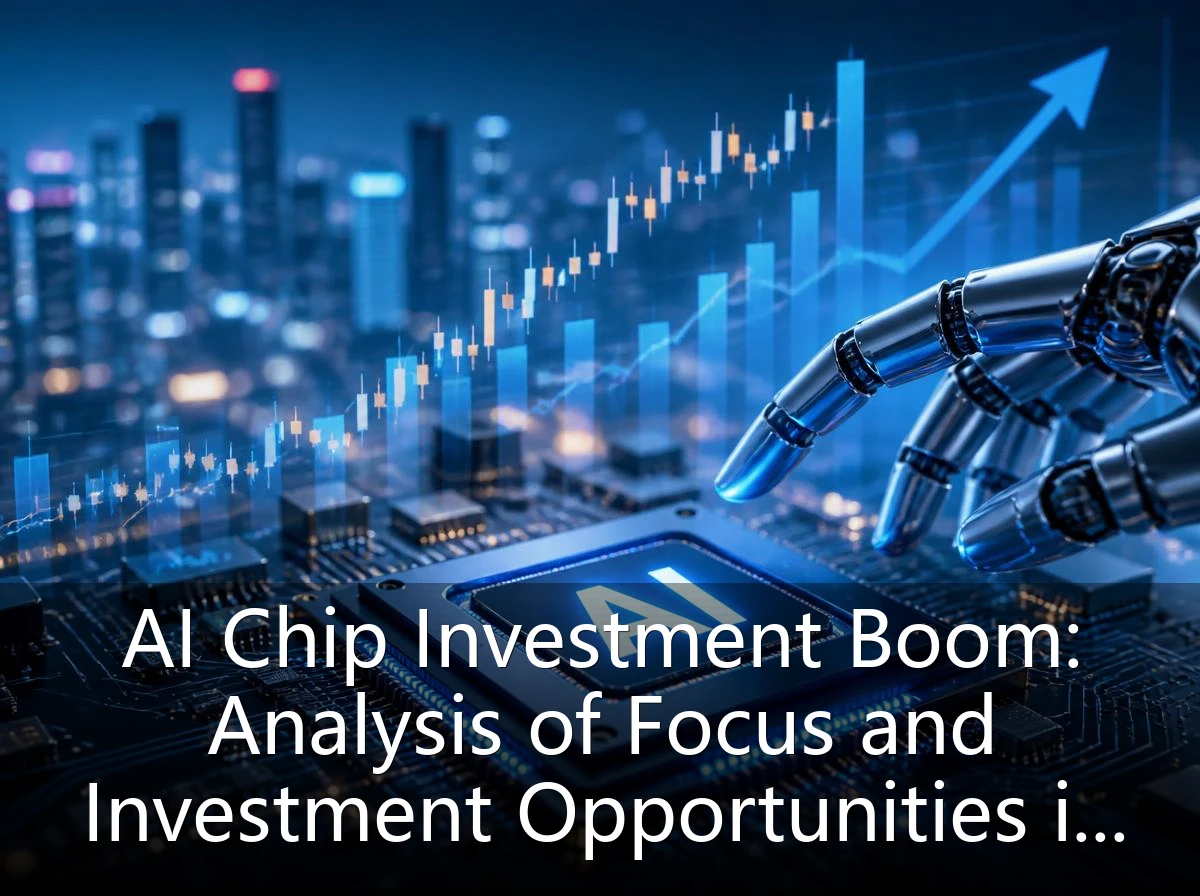
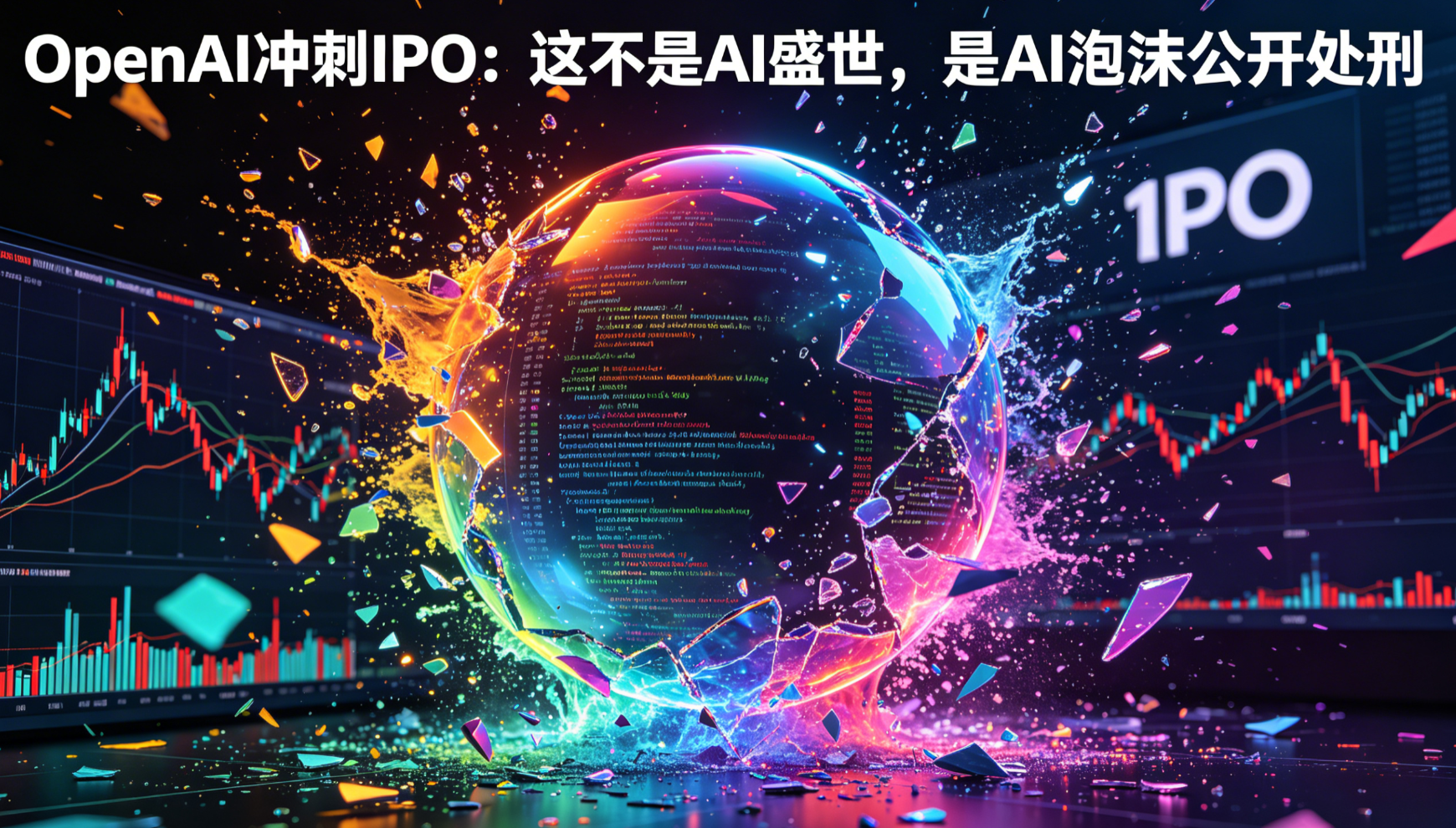
The market scenario in the figure above intuitively reflects a reality: Investment enthusiasm around AI and semiconductors has entered a white-hot phase. OpenAI, as a benchmark in the AI field, has its potential IPO plan seen as a barometer of market confidence. As one of the biggest beneficiaries of AI chip demand, NVIDIA's market value surpassed $2 trillion in just two years, and semiconductor giants like TSMC, AMD, and Broadcom also hit record stock prices. In the primary market, AI chip startups such as Cerebras, Graphcore, and Cambricon have secured unprecedented funding.
However, this concentrated capital heat also brings concerns. Historical experience shows that the maturation of technology industries often follows a cycle of “over-expectation—bubble burst—value return.” The internet bubble of the late 1990s and the rapid rise and fall of Bitcoin miner chips after 2010 are cautionary tales. Has the current valuation of the AI semiconductor market already overdrawn growth for the next five to ten years? Some analysts point out that declining training costs for large models and continuous improvements in computing efficiency may slow chip demand growth; if AI application deployment falls short of expectations, massive capital could suffer from overcapacity and inventory buildup.
3. Rational Layout: Long-Term Value and Risk Hedging in the Semiconductor Industry
Although short-term fluctuations are inevitable, semiconductors' long-term strategic value as infrastructure for the AI era is beyond doubt. For investors and policymakers, the key is to stay sober amid the frenzy and build a rational framework from three dimensions:
First, focus on technological diversity. Not all AI chips follow the same logic. Beyond general-purpose GPUs, application-specific integrated circuits (ASICs) for specific scenarios, photonic computing, and in-memory computing are emerging paths worth attention. Diversified investment reduces the risk of a single technology route failing.
Second, value supply chain resilience. Geopolitical factors have made semiconductor supply chain security a focal point of great power competition. Multiple countries, including China, are accelerating local capacity construction, creating structural opportunities in sub-sectors such as equipment, materials, and IP licensing.
Finally, avoid linear extrapolation. The development path of AI is full of uncertainty, with the slowdown of Moore's Law coexisting with uncharted post-Moore technologies. Investors should focus more on a company's technical moats, customer stickiness, and cash flow health, rather than relying solely on narratives like “AI concept.”
Conclusion
Semiconductors are the most solid physical foundation of the AI wave; without sustained breakthroughs in chip computing power, every impressive AI debut would be unsustainable. The market turmoil triggered by IPO rumors from OpenAI and others reflects both global extreme optimism about AI's future and the irrational tendencies driven by capital. For industry participants, embracing the intelligent era enabled by semiconductors must go hand in hand with a prudent approach to cycle fluctuations and bubble risks. Only by balancing technological depth and investment rationality can semiconductors truly become the perpetual engine driving continuous human progress.