OK, please see this professional article created based on reference content.
Political Game Behind the Fed's Hawkish Shift: Warsh Gets the White House's “Green Light for Rate Hikes”
Keywords: Federal Reserve, hawkish shift, rate hike expectations, Warsh, Bessent, Trump, inflation, White House stance
Introduction: A Quiet Policy Shift
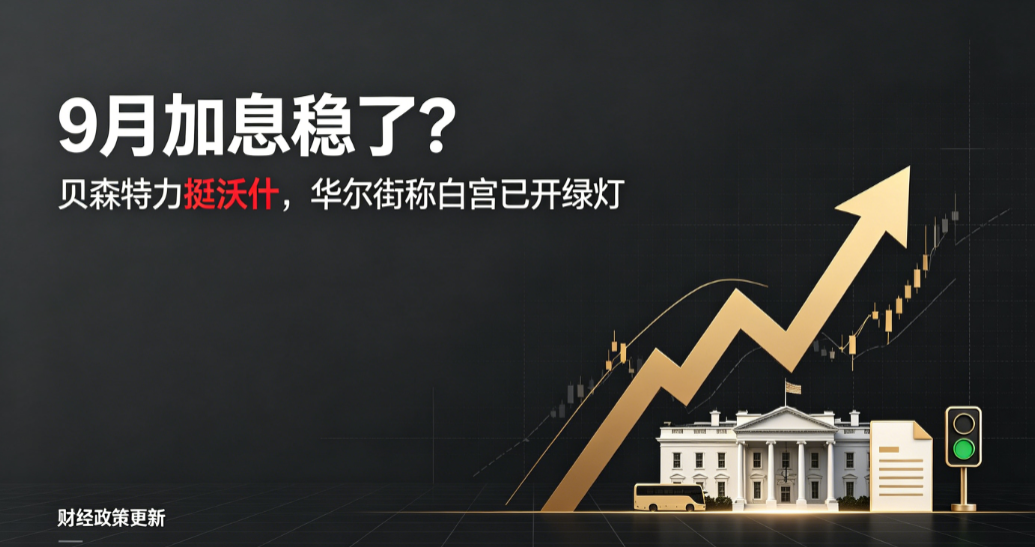
In recent months, Wall Street and even global financial markets have been speculating on a core question: Under the background of President Trump's clear preference for low interest rates, can newly appointed Fed Chair Kevin · Warsh withstand pressure from the White House and maintain independence in monetary policy? Outsiders widely predicted that unless Warsh could quickly push for more rate cuts, he would inevitably face Trump's fury. However, the hawkish signals released by the Fed at last week's meeting, followed by the unusually calm response from the White House, completely upended market expectations. The fact is that an important and complex political and policy game is quietly unfolding in Washington, with results pointing to a direction that shocks the market — the White House may have given a “green light” for the Fed's potential rate hike moves.
1. Hawkish Signals Shake the Market: Wall Street Reassesses Rate Hike Probability
Last week's Fed meeting was undoubtedly the trigger for this policy shift. The outcome was more hawkish than the market expected, catching many investors off guard. The most impactful information came from the so-called “dot plot,” which showed that among 19 Fed officials, 9 expect to raise rates this year, with 6 even expecting more than one rate hike. Although Warsh himself did not give a personal dot plot forecast and declined to comment directly on these predictions during the press conference, he clearly emphasized that the core of Fed policy is “committed to stabilizing inflation.”
The market reaction was extremely rapid and clear. According to data from the Atlanta Fed's Market Probability Tracker, investors now see the probability of the Fed starting rate hikes within this year soaring to over 75%. This sharp rise indicates a fundamental reversal in market expectations from the “continued rate cuts” at the beginning of the year.
The forecasts of major Wall Street investment banks quickly adjusted accordingly. Bank of America (BofA) and Deutsche Bank now both predict that the Fed will start raising rates in September this year. Among them, BofA's forecast is particularly aggressive, expecting three rate hikes this year, making it the most bullish institution on rate hikes among mainstream Wall Street banks. Goldman Sachs strategists warned that the possibility of a rate hike in July has also reached 50%. For a time, rate hikes were no longer an extreme hypothesis but became the focus of mainstream discussion.
2. White House Stance Shift: From “Preference for Low Rates” to “Tacit Approval of Rate Hikes”
This hawkish shift appears unusual mainly because it stems from a subtle change in the White House's stance. President Trump has consistently expressed a preference for low interest rates and has repeatedly criticized former Fed Chair Powell for being slow to cut rates. However, from a series of recent speeches by Treasury Secretary Bessent, the outside world has captured a key signal: the White House not only did not express dissatisfaction with Warsh's hawkish rhetoric but instead gave unprecedented support.
On Tuesday evening, Bessent delivered a speech to business leaders in New York. During the subsequent Q&A session, when asked about his views on Warsh, Bessent expressed confidence in Warsh and stated: “Warsh will optimize the policy path for inflation and economic growth. He will remain independent and act according to his own judgment.” Neil Dutta, head of economic research at Renaissance Macro Research, noted after interpreting Bessent's remarks that his direct impression was that Treasury Secretary Bessent had opened a “green light for rate hikes” for Fed Chair Warsh.
Dutta therefore predicts that the Fed is very likely to start raising rates in September. This would be the Fed's first rate hike in three years, and its impact would completely change the current financial market outlook. Analysts believe that behind the White House's stance shift is a sober recognition of rising inflation and political risk. Bessent admitted on Tuesday that Trump understands a profound truth: “The bond market has overthrown more governments than howitzers.” This clearly refers to the political consequences that could arise from rising long-term borrowing costs driven by inflation. In addition, Bessent also predicted that as U.S. and Iranian negotiators work to end the war, U.S. consumer price increases may slow, which may also form the logical basis for the White House's willingness to tolerate a “limited rate hike.”
3. Supporting Warsh: Endorsement from the Treasury Secretary and President
Bessent's support for Warsh was not a one-time statement. In a media interview on Wednesday morning, he once again publicly backed the new Fed Chair. He believes that Warsh will take the “best path” to achieve the Fed's dual mandate — reducing inflation and maintaining a strong labor market. He particularly emphasized: “You see, he (Warsh) has been tough on inflation from the start.”
Bessent also revealed that Trump fully trusts Warsh. He recalled: “I remember when we got off the plane in France, the president said: ‘I want him to do the right thing, that's why I chose him.’” This statement hit the core — Trump chose Warsh not to find a subservient “rate cutter,” but a “correct decision-maker” who can independently handle complex economic situations.
More subtly, Bessent voluntarily mentioned a historical episode from early 1997, when former Fed Chair Alan · Greenspan led a “tap-the-brakes rate hike,” which did not slow down the economic expansion at the time. A year and a half after that hike, the Fed then implemented three consecutive rate cuts. Some analysts believe that Bessent cited this historical allusion to imply that the current economic situation may require similar gradual, tentative interest rate adjustments. In other words, the Fed might implement a small rate hike, not to start a sustained tightening cycle, but to control inflation expectations and leave more room for future policy. The Fed's economic forecasts released last week also confirmed this thinking: the median dot plot shows that officials tend to raise rates once by the end of 2026 and cut rates once in 2027, which itself is a non-sustained tightening path of “first hike then cut.”
4. Stark Contrast: Trump's Different Attitudes Toward the Two Chairs
The White House's accommodating attitude toward Warsh stands in stark contrast to its attitude toward former Chair Powell. Later on Wednesday, Trump again “repeated the same old tune,” complaining that Powell was too slow to cut rates after taking office last year. When asked about the housing outlook, he directly criticized Powell and argued that the only solution to save the struggling housing industry was to lower interest rates.
However, toward Warsh, Trump's attitude was much more tolerant. Just last Wednesday, after the Fed released hawkish signals, Trump appeared surprisingly calm. When asked how he felt about the Fed's decision to hold rates steady, he simply replied: “It's fine, whatever.” And when asked about the possibility of rate hikes, he even said, rarely: “It could happen. It's hard to believe... but we have a very good leader over there now, so I have to follow his instructions.”
This contradictory attitude reveals the pragmatism in Trump's political decision-making. He is not unaware of the potential impact of rate hikes on the economy, but he clearly draws a clear line between Powell and Warsh: Powell is seen as someone who needs to be warned, while Warsh is given greater trust and operational leeway.
Conclusion: A Carefully Crafted Policy Balance
Overall, the possible path of Fed rate hikes is not a simple internal technical decision of the central bank, but a carefully designed policy balance among the Fed, the White House, and the market. Treasury Secretary Bessent, by publicly supporting Warsh, provided the highest-level political endorsement for hawkish policy; while Trump's seemingly “whatever” attitude and “follow instructions” concession are necessary compromises after acknowledging economic reality and political risks.
For the market, the key is no longer “whether to raise rates” but “how to raise rates.” If the Fed, as the market expects, implements a small, tentative rate hike in September and clearly states that its purpose is not to start a tightening cycle, then this round of hawkish shift may not only avoid dragging down the economy but instead consolidate the foundation for long-term growth by stabilizing inflation expectations. Warsh, at the beginning of his term, is completing a difficult balancing act: to stabilize prices, stabilize the economy, and stabilize the president behind him who is accustomed to interfering in monetary policy. And current signs indicate that he may have already taken the first successful step in this balancing act.