Australian Inflation 'Hangs Around': Is the Rate Hike Pause Just Half-Time?
Keywords
Australia Inflation; Central Bank Rate Hike; Core CPI; Economic Slowdown; Unemployment; Iran Conflict; Oil Price Volatility
Introduction: When Inflation Becomes a 'Squatter'
Imagine you are an Australian. You open your bank statement, bracing for another mortgage rate rise, but then you get hit again by the price of beef at the supermarket. The central bank said it would control inflation, so why does your wallet still feel emptier? This surreal combination of 'rising prices + cooling economy' is making life awkward for Australian residents.
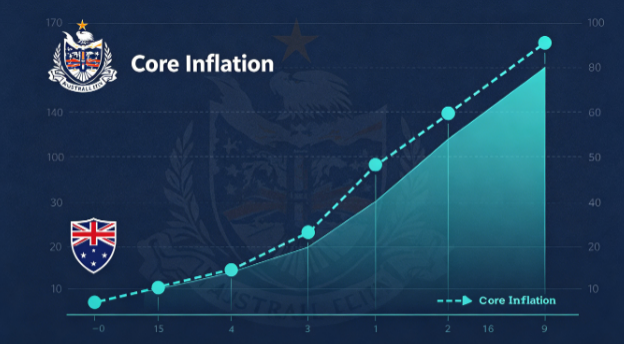
Just after June, the Australian Bureau of Statistics dropped a report that makes it hard to stay calm: the core inflation rate for May again exceeded the upper end of the central bank's target band. Excluding volatile items, core consumer prices rose 3.6% year-on-year, a bit higher than the 3.5% economists had guessed. Bear in mind, the Reserve Bank of Australia (RBA) has set its inflation target at 2% to 3%—this number has stepped on the accelerator, crossing the warning line. More critically, it also rose 0.4% month-on-month, higher than the expected 0.3%. This means the 'speeding train' of inflation has no intention of stopping at the station.
At the same time, the economy is 'cooling down.' The unemployment rate unexpectedly jumped to a four-and-a-half-year high, and consumers' spending hands are starting to tremble. Add to that the ongoing conflict in Iran and the uncertain negotiations to reopen the Strait of Hormuz—oil prices go up and down. The RBA's position is like holding keys for both 'rate hike' and 'rate cut,' not knowing which door to open first.
Today, let's chat about this in a light way—why is inflation so sticky in Australia? Is the central bank's pause a strategic delay or a sign of having no tricks left? And how should ordinary people face this 'wallet defense battle'?
1. Core Inflation Exceeds Expectations Again: Where Does the 'Stubbornness' of Prices Come From?
Let's look at the numbers: May core CPI in Australia was 3.6% year-on-year, 0.4% month-on-month. What do these numbers mean? In simple terms, even if you strip out volatile items like petrol and fruit and vegetables, the 'underlying heat' of prices is still higher than expected. This also means that the previous rate hikes by the central bank (which raised rates at each of its first three meetings this year and only paused last week) have not had as much effect as thought.
Why are prices so stubborn? I think there are several reasons:
First, service costs and housing costs are 'holding up.' While goods prices have gradually fallen, service items like rent, repair labor, and dining out are still climbing. Especially after the return of immigrants and international students, housing demand has boomed, driving up rents, which has a comprehensive impact on household spending.
Second, wage pressure is passing through. Although the labor market is 'cooling' recently—the unemployment rate rose to a four-and-a-half-year high—in earlier years companies had to raise wages to attract workers due to labor shortages, and these costs are eventually passed on to your coffee and hair salon bills.
Third, the 'aftereffects' of global supply chains and geopolitical risks are still stirring things up. Oil from the Strait of Hormuz—when the strait is blocked, petrol station prices in Australia jump. Although there are now peace talks between Iran and the U.S., no one can guarantee that crude supply will return to pre-war levels immediately. As the saying goes, 'Oil prices sneeze, inflation catches a cold.'
So, the inflation demon is not so easy to get rid of.
2. Signs of Economic Slowdown: Soaring Unemployment, Consumers 'Tighten Wallets'
If inflation is a scorching sun, then the economic slowdown is a gradually descending dark cloud. Australian Bureau of Statistics data shows the unemployment rate unexpectedly jumped to a four-and-a-half-year high. What does that mean? It is a direct result of companies and households becoming pessimistic about the economic outlook after successive rate hikes.
Companies are afraid to hire, and some are even laying off workers. Consumption is also weakening. Go to a shopping mall, and you might find more promotions than a year ago. The consumer confidence index has been sliding; everyone is 'saving, saving, saving'—from ordering takeout less often to postponing car upgrades, appliance replacements, and canceling travel plans. This self-tightening cycle, in turn, reduces companies' revenues, further hurting employment.
The burden of mortgage repayments is also suffocating many families. Australian mortgage rates are tied to floating rates, so central bank rate hikes directly affect monthly mortgage payments. Many people who used high leverage to buy homes now have to pay several hundred or even over a thousand extra Australian dollars each month. Under such circumstances, it's hard not to scrimp and save.
So you see, under the combination of 'high inflation + economic slowdown,' ordinary people are easily caught in a bind: 'have to pay the mortgage, but also save on groceries; don't want prices to rise, but fear losing a job.'
3. Iran Conflict and Oil Prices: The 'Sword of Damocles' of Geopolitics
When talking about inflation, oil prices are unavoidable. Behind the May data, there is also a global undercurrent—the risk of conflict in the Strait of Hormuz. The U.S. and Iran were caught in a major dispute over agreements, and their armed standoff in the Persian Gulf once made global shipping nervous. Although there are now reports that both sides have initiated negotiations for a permanent peace agreement and the Strait of Hormuz is gradually reopening, 'returning to pre-war levels' can happen quickly or drag on for half a year.
For an economy like Australia, which is highly dependent on crude oil imports, any disturbance in the Middle East immediately hits petrol station prices. Moreover, Australia itself is a major energy exporter, but it exports liquefied natural gas and coal, which are different from petrol prices. So when international oil prices rise, domestic inflation pressure follows.
But the current suspense is: can the peace agreement really be finalized? If not, oil prices could rebound at any time, forcing the central bank to raise rates again. If oil prices fall, inflation pressure may naturally ease, giving the central bank room to breathe.
4. Central Bank's 'Pause': Strategic Choice or Necessary Evil?
Last week, the RBA finally paused rate hikes, keeping the rate at 4.35%. This is the first brake after three consecutive rate hikes this year. Market reaction was complex: some cheered 'finally over,' while others feared 'just half-time.'
From the central bank's statement, this pause is based on a delicate judgment: they believe the cumulative effect of previous rate hikes is still transmitting and is expected to further curb consumption and investment in the coming months, thereby suppressing inflation. But the problem is that after the core inflation data came out, this judgment may be called into question.
Some analysts point out that if July's inflation data continues to exceed expectations, the central bank may have to raise rates again in August. Because once the market forms the illusion that 'inflation has peaked,' households and businesses may let their guard down, continue consuming and raising prices, leading to a rebound in inflation. The central bank's job is like 'cat and mouse'—it must respond quickly but also be cautious.
Some friends might ask: why not just pause and observe? The advantage of pausing is that it allows for monitoring of the economic direction, avoiding a recession by using too much force. But the cost is that if inflation continues to rise, the central bank faces a 'credibility loss' risk. So, at this point, the RBA's decision-makers are walking a tightrope—left foot is inflation, right foot is employment, and in between are political pressure and public sentiment.
5. Ordinary People's 'Wallet Defense': Prepare for Winter
After all this macro data, what ordinary people care about most is: how does it affect me? How should we respond?
First, mortgage holders may need to prepare for the reality of 'high rates for a long time.' Even if the central bank pauses, the market generally expects high rates to last at least another year. This means if you have a floating-rate mortgage, it's best to lock in some fixed rates as soon as possible, or consider early repayment to reduce pressure.
Second, consumer prices are unlikely to fall significantly in the short term. Especially for rigid expenses like rent, insurance, and food, prices may continue to rise moderately. So, optimizing daily spending, avoiding impulsive consumption, and stocking up on necessary goods (but not too much, to avoid hoarding pushing up prices) are wise choices.
Third, the job market has shown signs of weakness. If you are considering changing jobs, you may need to be cautious. Now there are more people looking for jobs and fewer opportunities. Keeping your current job stable and enhancing your core competitiveness is the safest 'life insurance.'
Finally, investment: resource stocks (like iron ore, natural gas) may fluctuate due to changes in overseas demand, and now is not a good time to chase highs. High-interest bank deposits or bonds, on the other hand, have become 'earn-while-you-sleep' options—although the returns are not very high, they are better than being eaten up by inflation.
Conclusion: This Stubborn Inflation Dog is Not Easy to Shake Off
Overall, Australia's current economic picture resembles a suspense drama: although inflation 'hangs around,' the economy is 'shivering'; the central bank has 'pressed the pause button,' but hawkish forces are ready to strike again at any time; international oil prices and geopolitics are like two invisible hands behind the scenes, ready to disrupt the script.
For Australians, perhaps the best preparation is for a prolonged battle of 'high rates + weak growth.' The good news is that Australia's economic foundations are still relatively solid. As long as the job market doesn't collapse and no new black swans appear globally, this adjustment is likely not a catastrophic crash but a painful 'soft landing' exercise.
Finally, to end with a light-hearted note: look at your wallet, look at your mortgage bill, and then look at the price tags at the supermarket—these days, what you can preserve is not face, but the cash in hand and patience for the future. Australian inflation may still be mischievous, but as long as we respond rationally, one day it will obediently lie down within the central bank's 'target range.' As for when that will be? We'll just have to wait and see.